

HOW WE LIVE
Embodied faith.
We seek to be a place where everyone is welcome at the table, free to explore who God is and what it means to follow Jesus.
A commitment to life in Christ is a commitment to bear with one another through joy, sorrow, and difficulty. It is a daily "yes" to wrestle with complexity and be confronted by mystery. Our deepest desire is for every person to know Jesus as Lord, and to make the pursuit of Him their number one priority.
We do not have a formal statement of faith or an exhaustive list of theological positions. For us, it’s enough to say we believe in Jesus as Savior and the Bible as God’s word. The postures and the tenants reflected here are how we choose to express who we are trying to be as a Christian community of faith.
FORMED IN UNITY
Our roots & story.
UCC's theological foundations are rooted in the Restoration Movement, a unity-focused group that emerged in the early 1800s in response to denominational divisions. Their guiding principle was simple: "In essentials, unity; in non-essentials, liberty; in all things, love." This vision was a return to the church model we see in Acts 2, rejecting formal creeds and membership requirements while extending Jesus’ Table (The Lord’s Supper) to everyone. This movement's spirit still guides and helps shape us today. We remain committed to adapting our practices in service to the mission, always in submission to Jesus.

A campus-focused church.
CINCINNATI UNIVERSITY STUDENTS
In November 1989, UCC emerged from a vision to expand an existing campus ministry, called Challenge Unlimited, into a church community. The goal was to create broader opportunities for spiritual growth and discipleship among college students that would help encourage them to pursue broader ministry opportunities as they moved beyond the university setting. While the University of Cincinnati was our primary connection, students from other local campuses joined us in those early days too.
Over the years, as students finished their education, many moved away—returning home, pursuing advanced degrees, or following career opportunities elsewhere. At the same time, many graduates stayed in Cincinnati, choosing to continue pursuing life together at UCC.
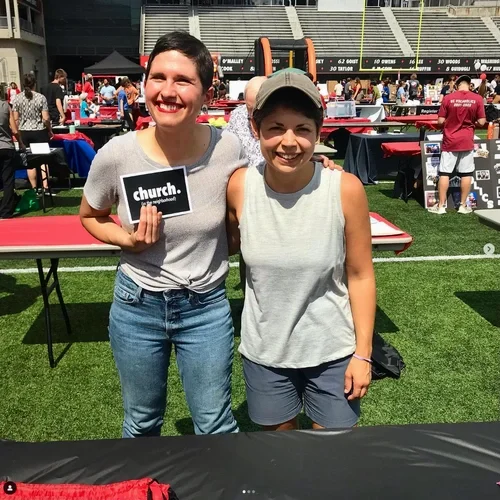
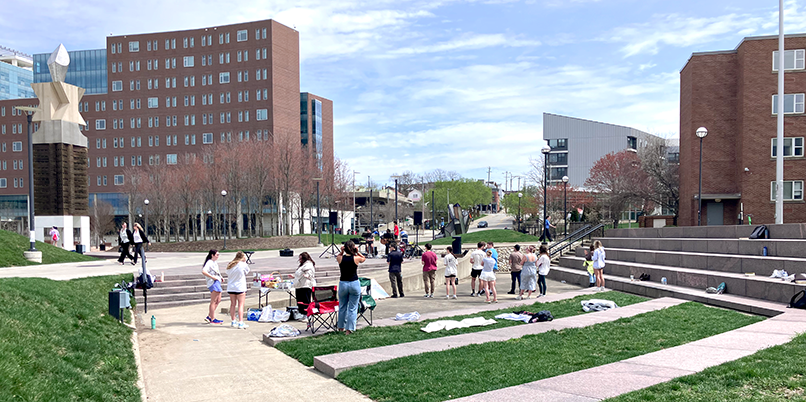
Today, as we come together as leaders, newcomers, and longtime participants within the UCC community, we do so seeking to form an imagination for how God might be calling us to love our neighbors in this particular place, at this particular time. Still situated a stone's throw from the University of Cincinnati we believe our primary mission is towards the campus, and trust this work happens in big and small ways, over weeks, months, and years.
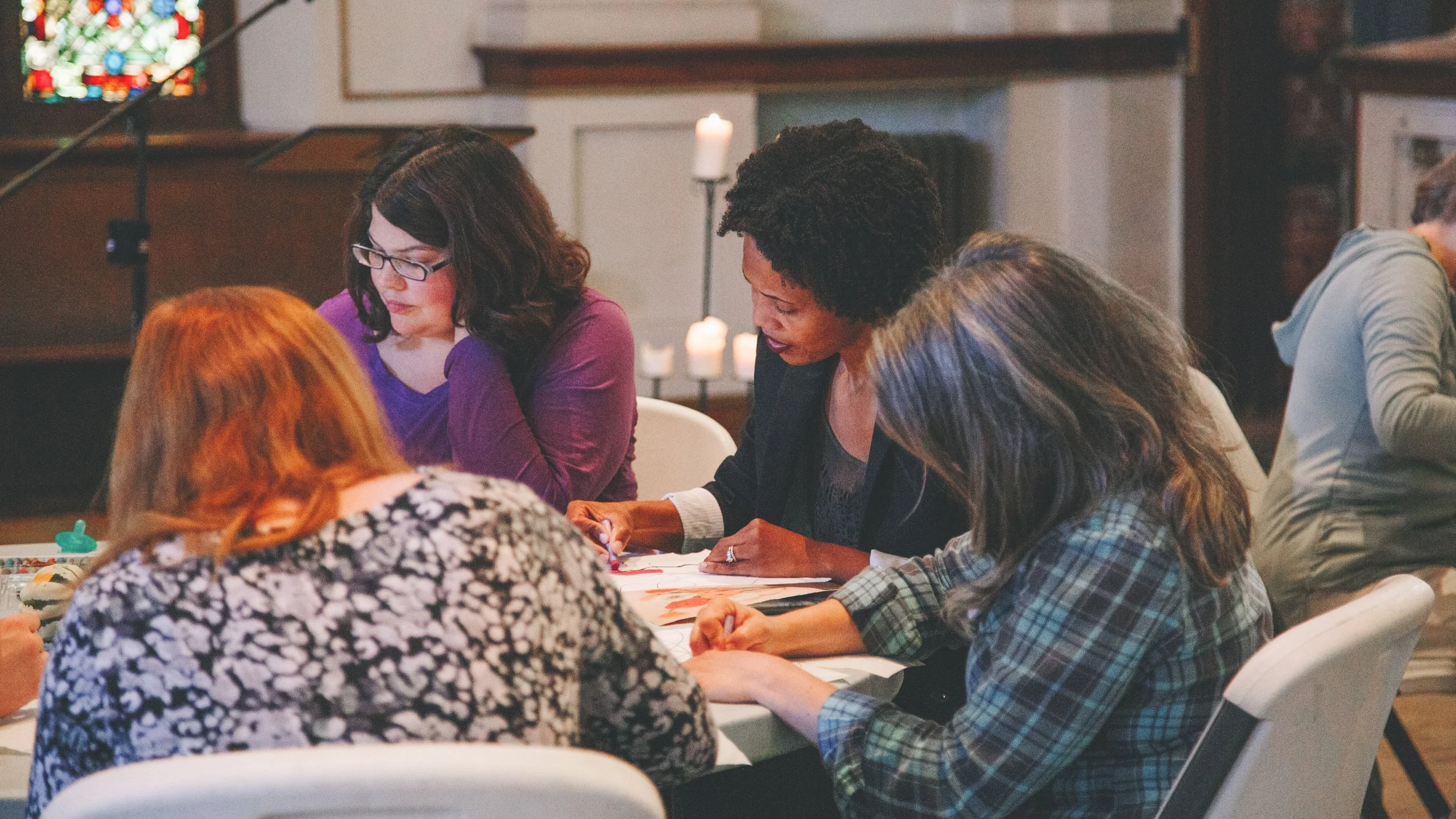
Formed through practice.
AT OUR CORE
We believe Christlike formation is a lifelong process that requires faithful practice. Together, we anchor to four core practices that help us deepen our discipleship to Christ and our commitment to one another.
-
We're committed to saying "yes" to regular fellowship within our church community, and being faithfully present in our university neighborhood. This means being welcoming, kind, and generous to everyone who crosses our path—whether they're longtime members of the community or someone walking through our doors for the first time. We believe there's something beautiful about putting down roots and really showing up for the people God brings around us.
-
We're actively pursuing unity even when (especially when) so many of us come from different backgrounds and perspectives. We honor every person as someone made in God's image, and we stand alongside those who feel lonely, overlooked, or pushed to the margins. It's not always easy work, but we believe it's essential to who we're called to be as followers of Christ.
-
We spend regular time together diving into the Bible and sharing personal stories of how we've experienced God's goodness and love in our lives. We're also finding fresh ways to connect with the rich traditions and practices that have shaped the Church throughout history. There's wisdom in these ancient rhythms that still speaks to us today—so we look for it, talk about it, and try to embody it.
-
We're choosing to embrace the slower, more relational ways of Christ in every part of life. This means setting aside regular time for prayer, fasting, quiet reflection, sabbath rest, and yes—even play! We walk alongside each other in our growth, trusting the process and God's timeline for each person.
Formed through posture.
In addition to our core practices, we come together around a handful of shared postures—or, "ways of being"—that help keep us anchored to the Jesus way.
-
Practicing presence means trusting that God is alive in you through the Holy Spirit, and that this living light, power, and love desires to shine brightly through you. The more we surrender ourselves to Christ, the more Christ can flow through us and into the lives of others. At UCC, we desire to be people who show up as our whole selves, recognizing that discipleship to Christ is a lifelong journey of becoming more and more of who God created us to be.
-
Maintaining a faithful posture of prayer is paramount to our lives as disciples of Christ, and undergirds everything we do as a church. There is no singular "right" way to pray. Prayer is merely about entering into an ongoing conversation with God, trusting that God hears every word (right along with our wordless groans and sighs) and does not turn away. At UCC, we desire to be people who pray together regularly, making rhythms of prayer—both communal and individual—a regular part of life.
-
Scan the Gospel accounts and notice how frequently Jesus asks questions. Jesus knows how to stir hearts and minds, provoking curiosity and wonder in his hearers. At UCC, we desire to be people who make space for questions (even the ones we may never be able to fully answer), always growing in our capacity to ask the kinds of questions that draw people deeper into possibilities in their walk with Christ.
-
Hospitality is about "making room." This might mean literally making room for someone in our home, or it might be making room for something (or someone) unexpected to "interrupt" our day. Making room for each other often includes complexity, like: extending forgiveness through pain; pursuing acts of justice for the sake of the weak and marginalized; or allowing space for nuance in our theological stances. Making room for each other might also be quite simple, like: giving someone a handshake instead of a hug based on their preferences, or using someone's preferred name and pronouns. At UCC, we desire to be people who make room for everyone to come and have a front-row seat at the table, to encounter Christ and experience His welcome with equal freedom.
-
Jesus touched the unclean. Jesus affirmed women in a patriarchal society. Jesus broke the Sabbath Law so the hungry might be fed. Jesus did not allow sin, social status, or political leanings to create barriers to Him. Instead, Jesus invited "the least of these" to move from the margins of society into beloved community. To sit with him. To commune with Him. At UCC we recognize all people as made in God's image—persons for whom Christ died—and therefore look for ways to engage in sacrificial acts of love and mercy, just as Christ did.
-
Jesus taught about repentance as part of the pathway into God's Kingdom. But repentance is so much more than just feeling sorry for our mistakes—it's a lifelong journey of turning away from the world's way and toward Christ, transforming how we think, act, and see everything. At UCC, we talk about repentance to encourage all of us to orient our lives toward Jesus' way, day by day. It's really about choosing to live differently because we're following Someone who loves us deeply.
-
The New Testament connects repentance with baptism, showing they're deeply linked. Baptism gives us a beautiful picture of a life made new: death, burial, and resurrection. The old self-centered life is gone, and new Christ-centered life begins. While repentance is ongoing, baptism is a one-time event that becomes a significant signpost in your faith journey—announcing your desire to follow God, while helping you remember your choice to surrender to His ways. At UCC, we practice baptism by immersion, though we honor different baptism traditions across the broader church.
-
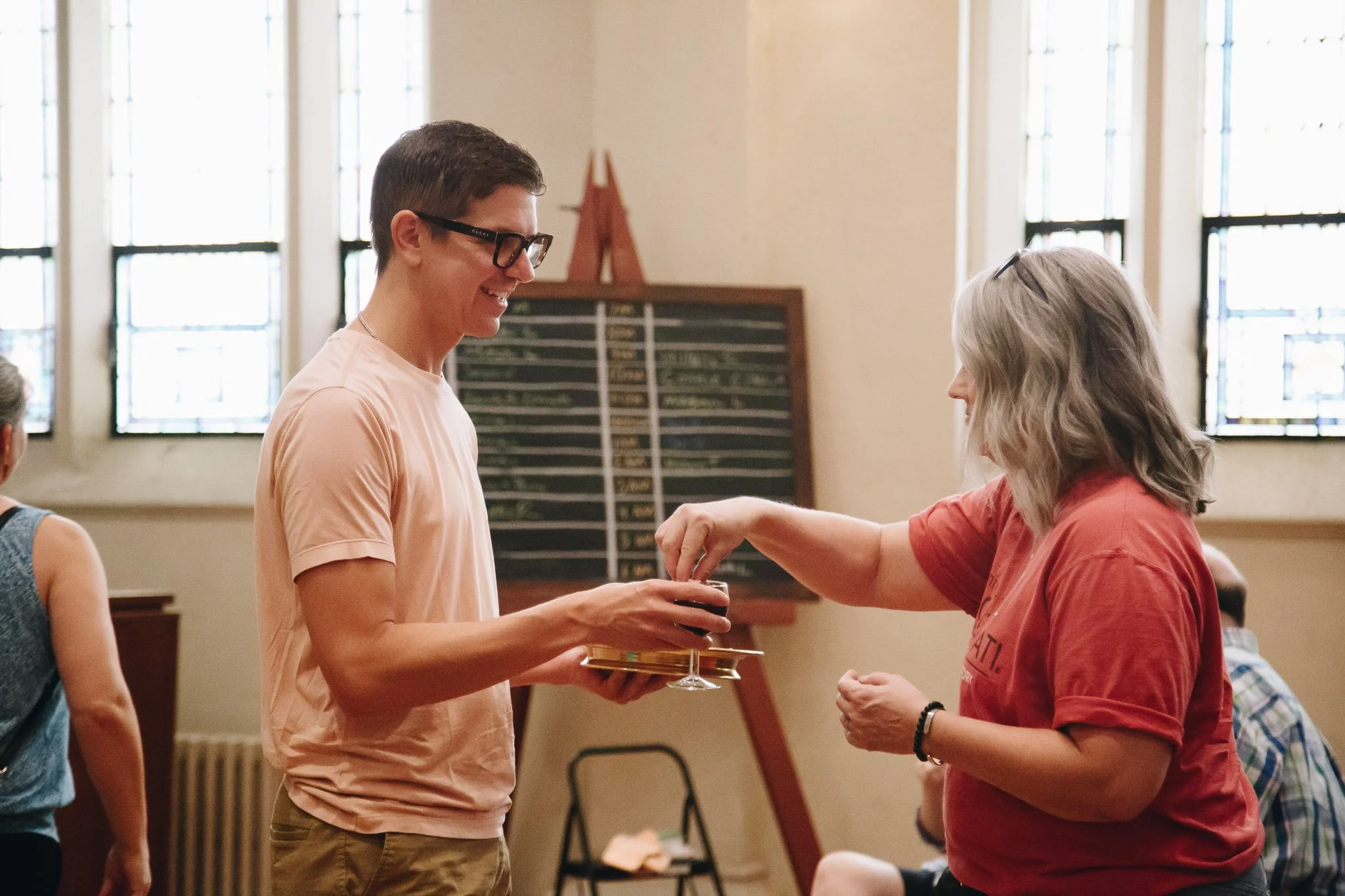
Communion is the heart of Christian worship. Gathering around the table reminds us of fundamental truths about God and ourselves. At the table, we remember Jesus' betrayal, death, and resurrection. We remember the sacrifice made for sin. We remember that we're all works-in-progress, needing Jesus' mercy and grace. We remember that we're called to make room for everyone to come and discover His love. At UCC, the communion table is open to anyone who chooses to participate. It's the Lord's table, not ours, and His invitation is for everyone who will come.
-
Marriage and celibacy are both beautiful, challenging invitations from God for the good of His people. We believe God can be honored and Christ can be served through both paths—and neither is better than the other. At UCC, all individuals and couples have the freedom to choose whether they believe God is calling them to faithful celibacy or faithful marriage. If our sibling in faith is called to celibacy, we want to honor their choice and walk alongside them to help them live faithfully. Similarly, if a couple is called to marriage, we want to honor their choice and support them in living out their calling.

A Heart for Inclusive Discipleship.
We're intentionally shaping a welcoming faith community centered on Jesus.
We call this approach "Inclusive Discipleship," and it starts with recognizing something pretty obvious: people have always interpreted Christian Scriptures in different ways, creating a rich diversity of belief systems. Consider how many Christian denominations exist today—this shows us how beautifully diverse Jesus followers can be.
-
By embracing the life, death, and resurrection of Jesus Christ, we begin the lifelong journey towards becoming more like Jesus. From this posture of deepening surrender, we begin to trust in the presence and power of the Holy Spirit in our lives, and in the lives of others within the body of Christ.
-
Scripture is the story we’re living. We can look across the entire biblical narrative to discover God’s engagement with His people over time and place, understand God’s reconciling, mission in the world, understand who Jesus is, and learn how to know and love Him better.
-
As we look upon the world we inhabit, we see people—including ourselves—living under the oppression of unjust systems, worldly powers, and cultural idols. We long to advance the Kingdom by proclaiming Jesus’ lordship across all domains—that Jesus is alive today, sits enthroned at the right hand of the Father, and has the power to overcome all forces of evil that seek to squander life.
-
In scripture, justice and righteousness are the foundations of God’s throne. We look to Jesus to see how God’s justice and righteousness are held together. In Jesus, we see the ongoing pursuit of “lost sheep,” those who have gone astray from God, controlled by unrighteous living. In Jesus, we see the ongoing pursuit of restoration, mending what’s broken in gentle ways. As followers of Jesus, we are called to this same pursuit of God’s good shalom.
-
Sin is estrangement from God out of which harmful action may arise. This separation, if left unattended, can lead to further damage, causing harm to ourselves and fractures in our relationship with/among God’s good creation. Recognizing our sinful nature before God—who loves us and wants to reconcile us back to himself—is what leads us to repentance, renewal, and new life.
-
Acknowledging sin leads to repentance, a deliberate “turning” that redirects our wills, hearts, and minds towards a gracious God. Repentance is not a one time action, but rather an ongoing lifestyle that strips us of our false natures and orients us towards just and right living. Opening to repentance means opening to the Spirit’s work in us, which we trust will lead us into all truth and freedom.
-
Baptism is an outward declaration of a lifelong commitment to live for God. The act of immersion symbolizes dying to our life outside of Christ and being raised, like Jesus, to live under the lordship of our One True King. Life, death, burial, resurrection!
What does this look like?

Meeting people where they are.
Our community includes people at many different stages of faith, and we trust that Jesus meets each person exactly where they are—because we've seen it. We celebrate that our community spans a wide range of perspectives and experiences. Just like Jesus invited both a zealot and a tax collector into his inner circle, we want to welcome that same kind of diversity—even when that requires us to become people who grow and maintain relationships with those who hold opposing world-views.
Following Jesus’ example.
Jesus consistently welcomed people society rejected—the unconventional, the vulnerable, the marginalized. Jesus even embraced people that religious leaders called “untouchable” or “unworthy,” challenging rigid authorities in exclusionary practices. Throughout his ministry, Jesus pushed people toward greater acceptance of differences and treated everyone with dignity and respect—ultimately sacrificing his own life for the sake of all people across all places and times. We desire to follow in Jesus’ footsteps.
Our role in God’s work.
Jesus’ teaching consistently emphasized love, justice, mercy, and faithfulness. We want to embody these qualities as well, as we seek to be a nurturing, accountable community where everyone makes Christlike formation their central aim. We believe transforming people into Christ's image is Christ's job. We simply join God in this divine work by fostering environments of acceptance and grace, allowing Christ to transform lives in His perfect timing.